
7 Prompting Lessons From the Leaked Fable 5.1 System Prompt
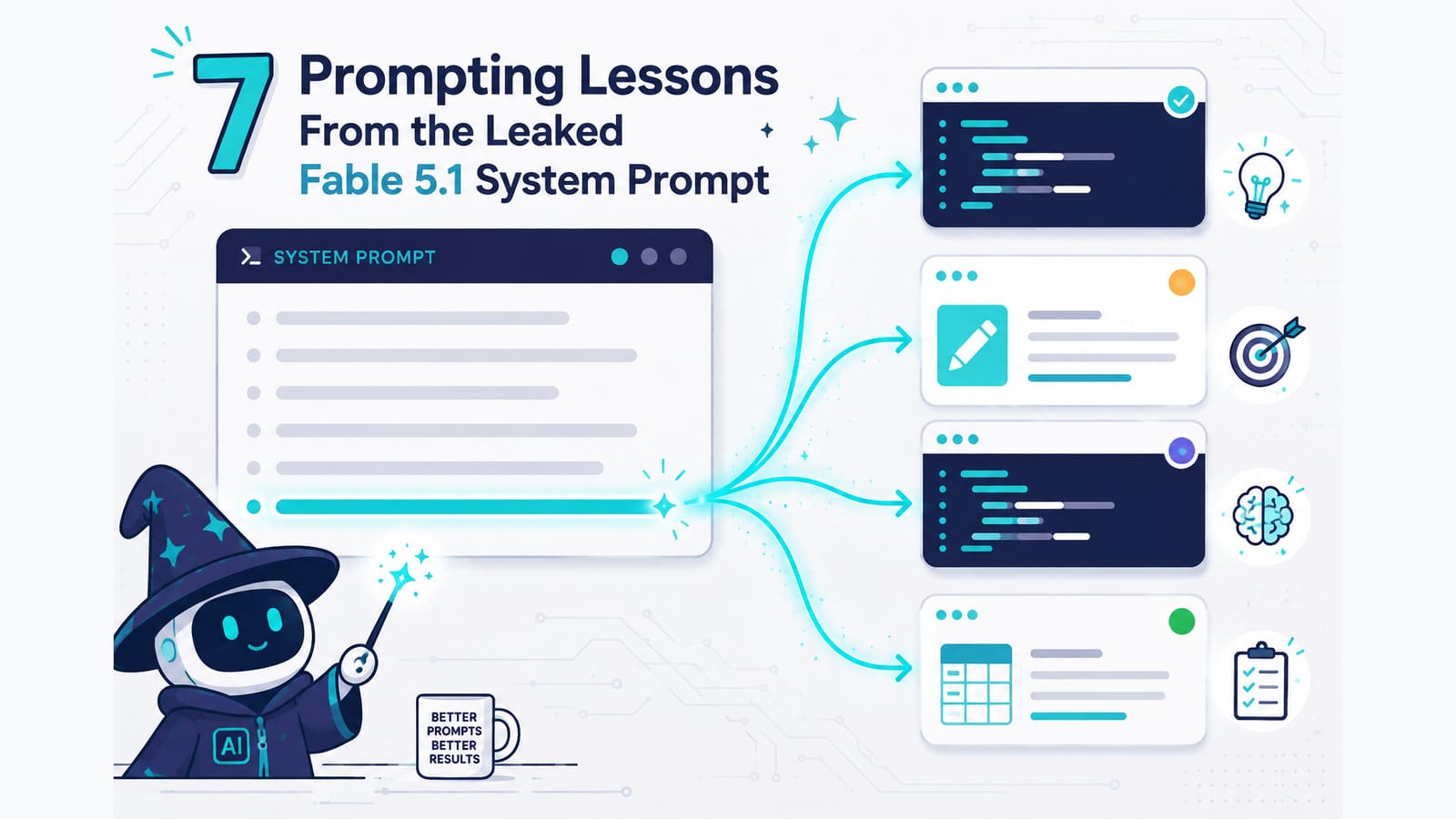
Flat vector illustration titled "7 Prompting Lessons From the Leaked Fable 5.1 System Prompt." A window labelled SYSTEM PROMPT holds rows of grey placeholder text with a glowing teal final line; four teal arrows branch from that line to four output cards, each with a status dot and an icon for ideas, targeting, reasoning and checklists. A small robot in a star-patterned wizard hat waves a sparkling wand beside a mug reading BETTER PROMPTS BETTER RESULTS.

A copy of the Fable 5.1 system prompt circulated on release day, and the interesting part is where its length goes: overwhelmingly on how the model should decide rather than what it should say. Seven of those decisions transfer into ordinary prompts as single sentences — including the three most people never write. The source is unverified, and the post explains why that doesn’t matter.
Don’t Let an AI Grade Its Own Homework — Use a Second Model to Review

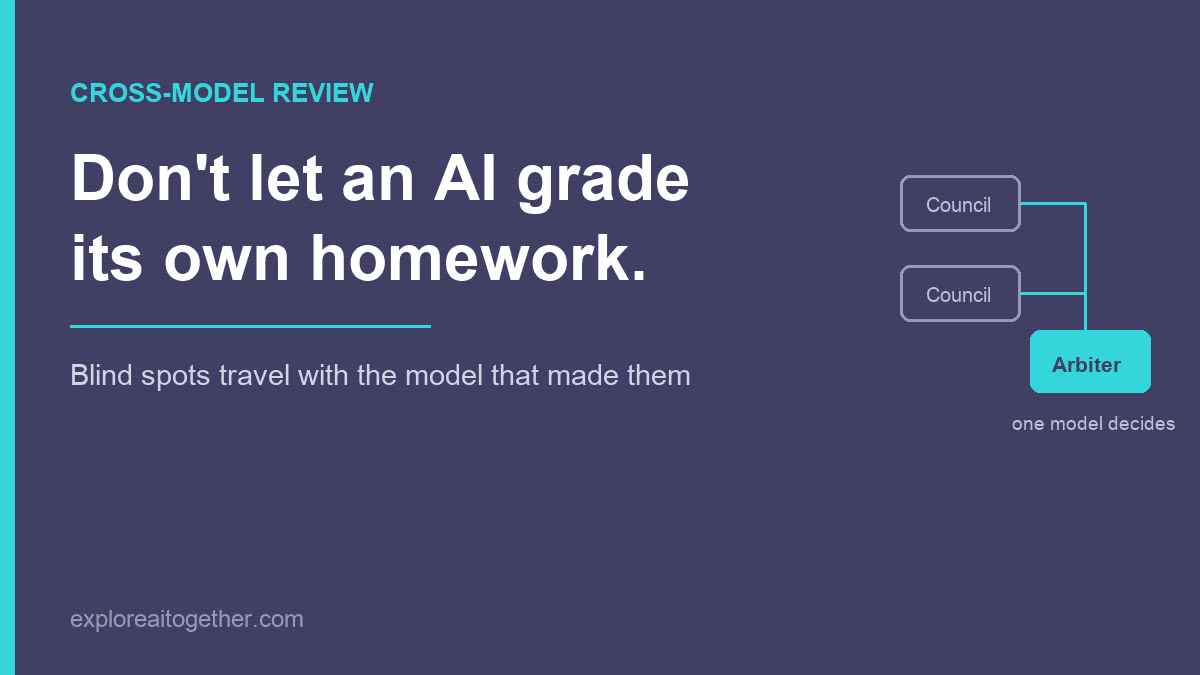
Don't let an AI grade its own homework. Diagram showing two council models feeding their responses into a single arbiter model that decides what to adopt.

Ask an AI to check its own work and it mostly agrees with itself — the blind spots that shaped the answer also shape the review. Here’s the two-model fix, the AI Council loop I used to design ChainMate, and why you name one model as the arbiter instead of letting them vote.

Gemini Notebooks and NotebookLM Are Now the Same Thing — Here’s How to Use Both

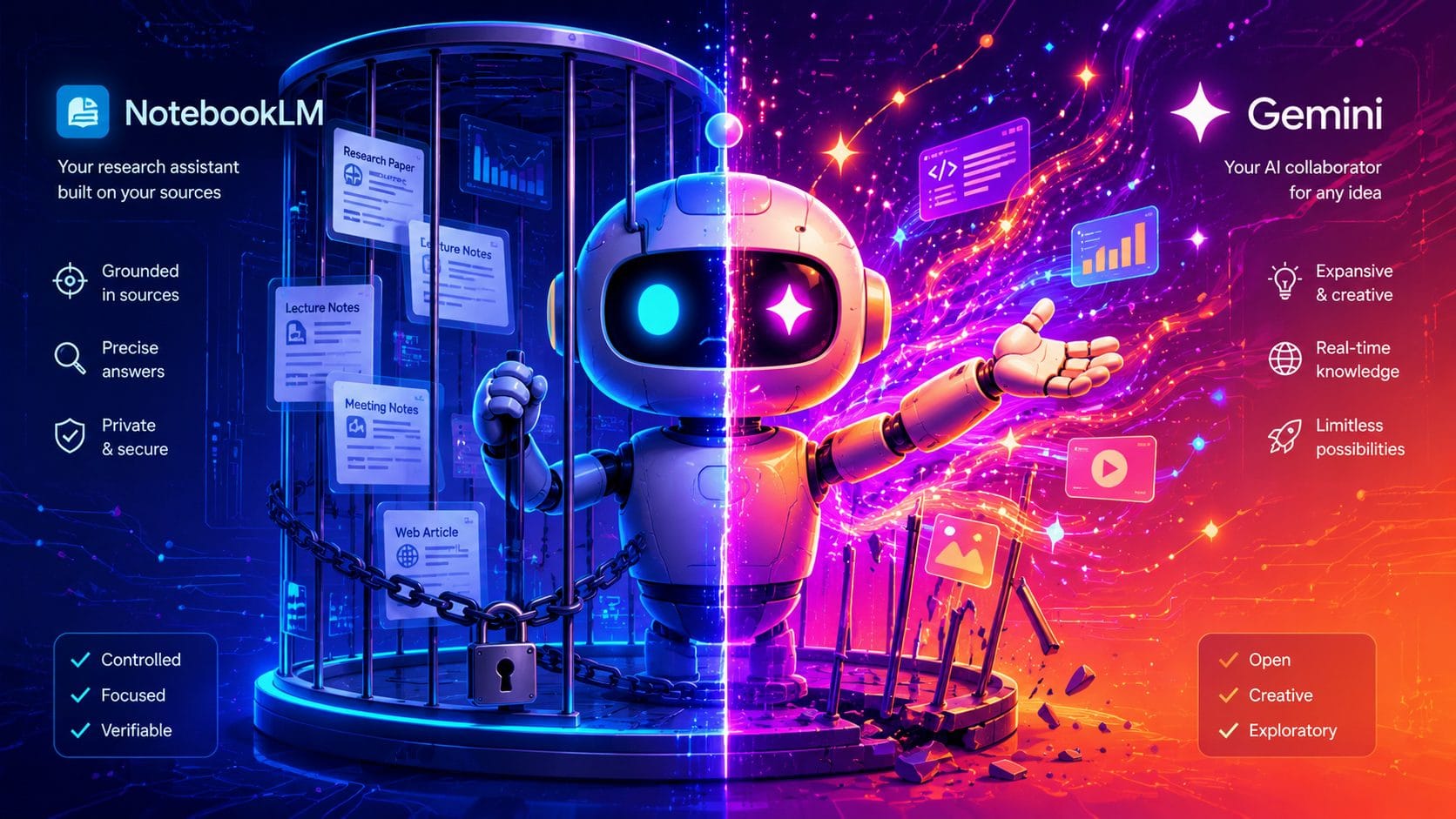
Robot split between NotebookLM (caged with source documents) and Gemini (free with creative sparks), showing when to use each tool

Google just merged Gemini and NotebookLM into a single workspace, and most of the coverage has been something like: “Gemini got folders.” That framing misses the point entirely. The real change isn’t about organisation. It’s about routing. You now have two interfaces sitting on top of the same notebook — and choosing the right one … Read more