
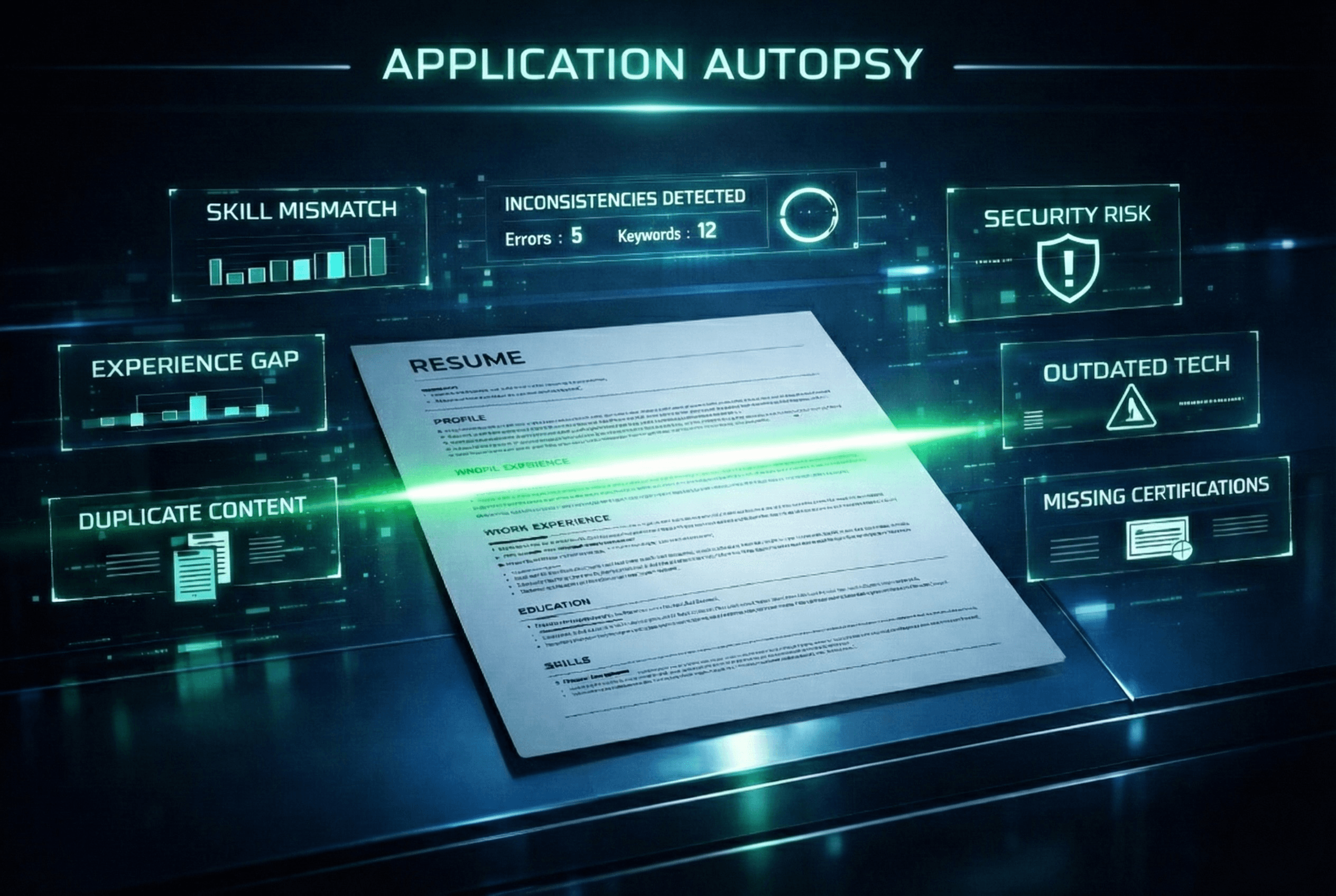
You applied. You were qualified. You clicked submit. And then… nothing.
No rejection. No interview. No feedback. Just silence.
If this keeps happening, it’s tempting to spiral—wondering what’s wrong with you, your resume, your entire career trajectory. But here’s the uncomfortable truth most career advice won’t tell you: your application probably failed before anyone with real expertise ever saw it.
That’s not a critique of you. It’s how the system actually works.
What Actually Happens After You Click Submit
When you submit an application, you’re probably imagining a thoughtful hiring manager reviewing your qualifications. Someone who understands your industry, recognizes your achievements, and can appreciate what you’d bring to the role.
That’s rarely what happens first.
In most companies, your application lands in a queue with dozens—sometimes hundreds—of others. The first person to see it is often a recruiter, HR generalist, or coordinator. They might be screening for multiple roles across different departments. They’re working under time pressure. And crucially, they’re not domain experts.
This isn’t anyone’s fault. It’s just math. When a role gets 200 applications and someone has 90 seconds per resume, they’re not evaluating depth. They’re scanning for signals. Most screeners look at job titles and the first third of your resume before deciding whether to slow down or move on. Does this person seem like an obvious fit? Do the keywords line up? Is there any friction that makes me move on?
This gatekeeper isn’t looking for the best candidate. They’re eliminating the ones who don’t instantly read as relevant. And if your application doesn’t signal clearly in those first moments, it doesn’t matter how qualified you actually are.
Here’s what makes this especially frustrating: the things that would impress a hiring manager are often invisible to a screener. Your nuanced experience, your transferable skills, the context behind your career moves—none of that registers in a 60-second scan. What registers is pattern matching. Does this resume look like other people we’ve hired? Do the job titles align? Is there obvious friction?
When screeners are overwhelmed, they default to “no” unless there’s a clear reason to say “yes.” Your application doesn’t need to be bad to get filtered. It just needs to require interpretation.
The hiring manager—the person who would actually understand your value—never gets the chance to see you.
The Application Autopsy: A Diagnostic Tool
An autopsy is a post-mortem. You examine what happened, not to assign blame, but to understand the cause of death.
That’s what this framework does for job applications.
Before we go further, let’s be clear about what this is and isn’t:
- This isn’t a resume optimizer.
- It isn’t networking advice.
- It isn’t a guarantee you’ll get interviews.
- It is a way to understand why this specific application likely went nowhere.
The goal isn’t to fix your resume or rewrite your cover letter. It’s to help you see your application the way the screener saw it—and understand why it may have been filtered out before expertise ever entered the equation.
This matters because most job seekers spend their energy on the wrong things. They polish resumes endlessly. They optimize for ATS keywords. They apply to more roles, faster, hoping volume will eventually work.
But if you’re consistently getting filtered at the gatekeeper stage, more applications won’t help. You need to understand what signal you’re actually sending—and whether you’re even targeting the right roles in the first place.
The Application Autopsy gives you that clarity. It won’t guarantee you get interviews. But it can stop you from wasting effort on applications that were never going to land.
A few important caveats before we get to the tool itself:
This doesn’t promise answers. The AI doesn’t have inside knowledge of what actually happened. But it can simulate the screening lens well enough to surface likely issues—things you might not see because you’re too close to your own story.
This doesn’t fix anything automatically. The output is a diagnosis, not a prescription. What you do with that information is up to you.
And this isn’t about self-blame. A failed application doesn’t mean you’re not qualified. It often means your qualifications weren’t visible to someone without context, under time pressure, scanning for shortcuts.
The Application Autopsy Prompt
Below is a prompt you can use with any AI assistant (ChatGPT, Claude, Gemini—free versions work fine). It simulates the employer’s perspective and diagnoses what likely happened to a specific application.
Copy the entire prompt, then add your own information underneath.
Application Autopsy — Employer Lens Prompt

You are acting as a hiring gatekeeper reviewing job applications under time pressure.

I am going to give you:
1) A job description
2) The resume (and optional cover note or message) I used to apply
3) How I applied and what response I received

Your task is NOT to rewrite my resume.

Your task is to simulate what likely happened during initial screening and explain, objectively, why this application may have failed BEFORE a knowledgeable hiring manager engaged.

Please follow this structure:

SECTION 1 — Likely Screening Context
Briefly describe who probably reviewed this application first (ATS, recruiter, HR generalist, etc.) and what they were optimizing for.

SECTION 2 — Primary Rejection Reason
Identify the single most likely reason this application did not progress.
Be specific and concrete. Avoid generic advice.

SECTION 3 — Secondary Contributing Factors
List up to two supporting issues that may have reinforced the decision.

SECTION 4 — Employer Lens Summary
In plain language, explain what this application signaled to the employer in under 30 seconds.

SECTION 5 — One Corrective Lever
If I were to apply to a similar role again, what is the ONE change that would most improve my odds next time?
This can be about targeting, framing, outreach method, or signaling — not just resume edits.

Be direct, realistic, and honest.
Do not try to be encouraging unless it is warranted.
How to Use This Prompt
You don’t need to be good at AI to use this. Here’s the process:
Step 1: Open any AI tool
ChatGPT, Claude, or Gemini all work. Free versions are fine.
Step 2: Paste the prompt first
Copy everything in the box above and paste it into the chat.
Step 3: Add your information underneath
After the prompt, add your details. You can either paste the text directly or attach files (PDF, Word doc, etc.)—whichever is easier:
JOB DESCRIPTION:
[Paste the full job posting here, or attach as a file]

RESUME USED:
[Paste your resume text, or attach the file you submitted]

HOW I APPLIED:
[Example: Applied through company website / LinkedIn Easy Apply / recruiter outreach]

RESPONSE RECEIVED:
[Example: No response / auto-rejection after 2 days / recruiter screen but no follow-up]

OPTIONAL:
[Paste or attach a cover letter, LinkedIn message, or email if you used one]
Step 4: Read the result once, all the way through
Don’t argue with it immediately. Let it sit for a moment. This is meant to show you how the application probably looked from the other side—not to confirm what you hoped was true.
Step 5: Focus on one takeaway
Don’t try to fix everything at once. Ask yourself:
- Does this explain why I got no traction?
- What should I stop doing next time?
- Was this role even the right target?
One insight is enough. The goal is clarity, not a complete overhaul.
What to Expect from the Results
The output will be direct. Sometimes uncomfortably so.
That’s intentional. Generic encouragement doesn’t help when you’re trying to understand why you keep getting filtered out. You need someone to tell you what the screener likely saw—not what you wish they saw.
A few things to keep in mind:
Common Diagnosis Patterns
The feedback you receive will often fall into one of these categories:
- The “Non-Obvious” Expert: Your experience is real and deep, but it requires too much interpretation to see your value at a 30-second glance.
- The Seniority Mismatch: Your titles or experience level don’t match how this specific role is framed by the employer.
- The “Adjacent” Candidate: Your resume reads as related but not a direct, plug-and-play fit for the primary requirements.
- The Referral-Only Wall: The role likely required a referral or internal connection, making a cold application statistically unlikely to succeed.
You might disagree. That’s fine. The AI doesn’t know everything about your situation. But before dismissing the feedback, ask yourself: is it possible the screener saw it this way? Their perception is what mattered, even if it was incomplete.
The diagnosis isn’t personal. This isn’t about your worth or your potential. It’s about whether one specific application, for one specific role, sent the right signals to the right person at the right time. That’s a much smaller question than “am I good enough?”
One lever is enough. The prompt asks for a single corrective action. That’s deliberate. Job seekers often try to fix everything at once, which leads to scattered effort and burnout. Focus on the one thing most likely to change the outcome next time.
If the feedback feels slightly uncomfortable, that’s usually a sign the lens is working. Comfort doesn’t produce clarity.
The Point Isn’t to Fix Everything
Most career advice tells you to try harder. Optimize more. Apply to more roles. Network more aggressively. Hustle.
This isn’t that.
The Application Autopsy is a diagnostic tool. It helps you understand what probably happened so you can make smarter decisions about where to spend your energy. Sometimes that means adjusting your approach. Sometimes it means pursuing different roles. And sometimes it means recognizing that a particular application was never going to work—no matter how qualified you were.
That last part matters. Not every failed application is a problem to solve. Some are simply bad fits, bad timing, or roles that were never really open. (Yes, “ghost jobs” exist—positions posted publicly when an internal candidate was already chosen, or roles that got frozen mid-process.) Knowing when to stop analyzing and move on is just as valuable as knowing what to improve.
If you’ve been applying for a while and getting nothing but silence, try running one application through this prompt. Not to beat yourself up. Just to see what was actually happening on the other side.
Sometimes the most productive move is to stop applying to roles that require you to explain yourself too much. If you have to fight that hard just to be noticed, it might not be the right environment for you to thrive in anyway.
You might find the answer was simpler—and less personal—than you thought.
If you ran this prompt and it clarified something—or if it surfaced a blind spot you hadn’t considered—I’d genuinely love to hear about it.
Frequently Asked Questions
Can AI really tell me why I was rejected?
AI doesn’t have access to a company’s private hiring decisions. But it can simulate how a time-pressured screener would view your application. By comparing your resume against the job description, it identifies the friction points that likely triggered a “no”—things you might not see because you’re too close to your own story.
What is an ATS (Applicant Tracking System)?
An ATS is software that employers use to manage and filter high volumes of applications. It scans for keywords and qualifications, which means if your application doesn’t match the job’s “pattern,” it may never reach a human. The Application Autopsy helps you understand whether ATS filtering or human screening was the more likely culprit.
How do I avoid the application “black hole” in the future?
The most effective approach is ensuring your application signals relevance within the first 30-60 seconds. That means aligning your job titles and top achievements so clearly that a non-expert screener doesn’t have to guess whether you’re a fit. Sometimes it also means pursuing roles through referrals rather than cold applications.